


The New Trend in Dentistry: Why Top Practices Are Keeping Oral Surgery In-House
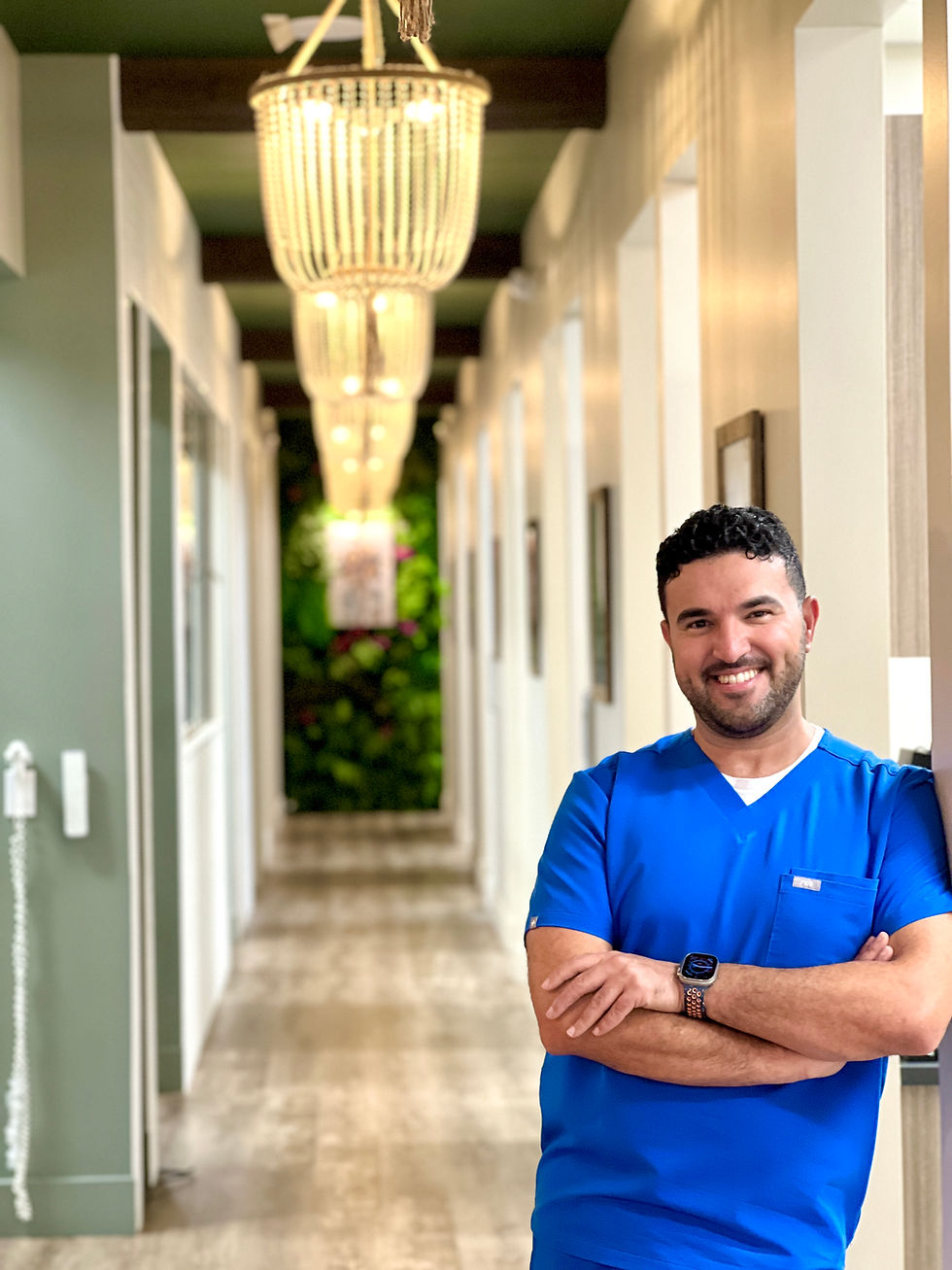
There is a quiet change happening in the most successful dental practices, and most patients never notice
it. The implant case that used to get referred down the street now happens in the same office, in the same chair, with the same team the patient already trusts. The only new face in the room is the surgeon, and the surgeon came to them.
This is in-house oral surgery, and the practices adopting it are not the ones cutting corners. They are the elite, growth-minded offices that have done the math and realized that referring surgery out is one of the most expensive habits in dentistry.
If you have ever watched a treatment-planned implant patient walk out your door with a referral slip and never come back, this article is for you.
What "in-house oral surgery" actually means
In-house oral surgery is simple in concept. Instead of sending your implant, extraction, bone graft, and full-arch patients to an outside specialist, you bring an implant surgeon into your practice on scheduled days.
The surgeon arrives with everything needed for the day. Surgical kit, implants, biologics, drills, and sedation capability where it is licensed and appropriate. Your team supports the visit the way it supports any other production day. The patient experiences specialty-level surgical care without ever leaving the office they already know.
It is the same model that locum physicians have used in medicine for decades. In dentistry, it is finally catching on, and for good reason.
Why Elite practices are making the switch
The dentists adopting this model are not doing it on a whim. They are responding to three realities that the traditional referral system creates.
1. The referral leak is bigger than most dentists realize
When you refer an implant case out, you lose a meaningful percentage of those patients entirely. Some never schedule the consultation. Some schedule and never show. Some complete treatment elsewhere and quietly migrate away from your practice for good.
Across the practices I work with, that loss tends to fall somewhere between a third and half of all referred cases. That is not a small leak. Those are your highest-value patients, and they are walking out the door with the work, the production, and often their entire family's future care.
2. The patient experience is better, and patients reward it
Think about what a referral asks of a patient. Drive somewhere new. Find new parking. Fill out new paperwork. Build trust with a stranger. Compare a second office's pricing to yours. Coordinate two separate treatment phases across two separate locations.
Every one of those steps is a reason to delay, and delay is the enemy of accepted treatment. When the surgeon comes to your office instead, all of that friction disappears. The patient sits in the same chair, in the office they already trust, and is introduced to a specialist by a doctor they already believe in. Treatment acceptance climbs, and so does patient loyalty.
3. The production stays where it belongs
A single implant case, from extraction through graft, implant, abutment, and crown, is significant production. A full-arch All-on-X case is one of the most transformative and valuable cases a practice will see all year.
When you refer those out, you are not just losing the surgical fee. You are losing the restorative work that follows, the hygiene that comes with a retained patient, and the referrals that patient would have sent your way. Keeping surgery in-house keeps all of it inside your practice.

The benefits, in plain terms
For the dentists weighing this decision, here is what bringing oral surgery in-house actually delivers.
You retain your patients. No more handing your best cases to an outside office and hoping they come back. The patient stays yours from diagnosis through final restoration.
You grow your scope without the overhead. You expand into implants and full-arch dentistry without hiring a permanent specialist, buying surgical equipment that sits idle most of the week, or sending yourself back for years of surgical training.
Your treatment acceptance improves. Patients say yes more often when the path forward is one office, one trusted team, and one seamless experience instead of a referral to a stranger.
You keep the restorative work. The surgeon handles the surgical phase and hands the case back to you for the abutment, the crown, and everything that follows. The restorative production stays in your hands, where it belongs.
You strengthen the patient relationship. Patients remember who took care of them through a major procedure. When that experience happens in your office, that loyalty belongs to your practice.
You build a reputation as a complete-care practice. Offering surgical services in-house signals that yours is a practice patients do not have to leave. That reputation compounds over time.
How the collaboration works in practice
The arrangement is designed to be a partnership, not a takeover. You agree on surgical days in advance, often a couple of days a month to start. Your team schedules patients for those days from your existing recall, hygiene flags, and treatment-planned cases.
The surgeon reviews the day's scans, performs the procedures, and documents everything for your records. Cases are planned collaboratively, so you stay informed at every step. The restorative phase comes back to you. The financial arrangement can be structured in whatever way works for both sides, whether that is a flat fee per arch, a percentage-based split, or a hybrid of the two.
The point is the opposite of competition. The surgeon is not there to take your patients or refer them elsewhere. The surgeon is there to give you a surgical capability you do not currently have, on the days you need it, so your patients never have to go anywhere else.
Is your practice a fit for this model?
In-house oral surgery makes the most sense for practices that already see surgical needs in their patient base but currently refer them out. If any of these sound familiar, the model is worth a serious look.
You regularly diagnose implant cases but send them to an outside specialist. You have watched patients disappear after a referral and never return. You want to grow into full-arch and complex implant dentistry without the cost and commitment of a full-time surgeon. You believe your patients deserve to receive their care in one place, from a team they trust.
The bottom line
The practices winning right now are the ones that have stopped treating surgery as something to send away and started treating it as something to bring in. They keep their patients, keep their production, and offer a patient experience that referral-based offices simply cannot match.
If you have been losing implant and surgical cases to outside referrals, there is a better way to run your practice. I work with general dentists across New Jersey, Pennsylvania, and Connecticut to bring oral surgery in-house, and I would be glad to have a conversation about what that could look like for you.
Dr. Mostafa Alwakeel is an implant surgeon providing in-house surgical services to dental practices across NJ, PA, and CT, including implants, extractions, bone grafting, and full-arch All-on-X cases. Learn more at dralwakeel.com.


Comments